
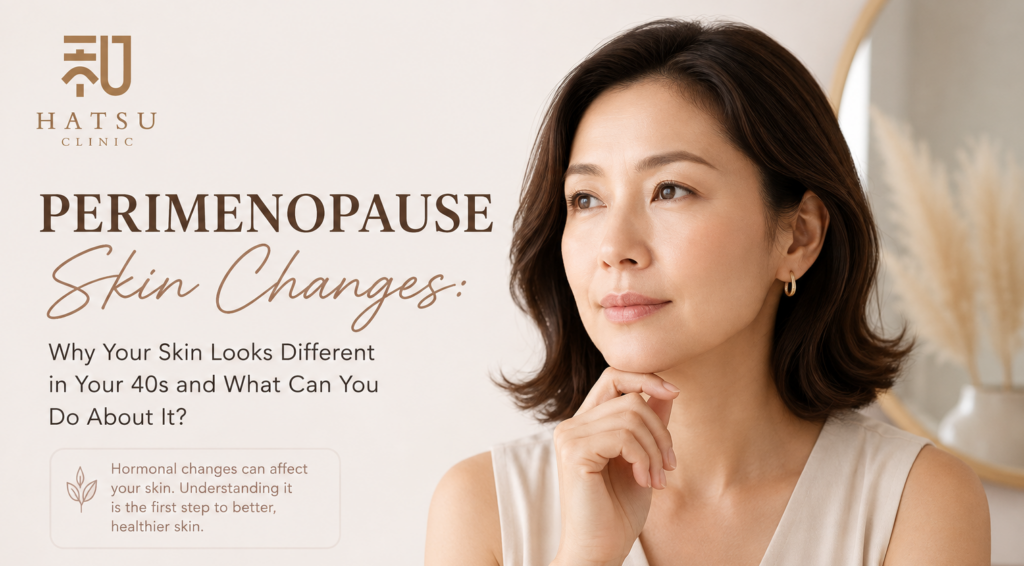
Your 40s can bring noticeable changes to your skin. It may feel drier, look duller, become more sensitive, or show fine lines and loss of firmness that weren’t as obvious before.
For some women, these changes happen alongside perimenopause , when hormone levels begin to fluctuate.
But not every skin change in your 40s is caused by hormonal changes alone. Ageing, sun exposure, genetics, stress, sleep and skincare habits can all play a role.
How Can Perimenopause Affect Your Skin?
1. Dryness & Dehydration
Hormonal changes can affect skin hydration and barrier function, making the skin feel tighter, rougher or more sensitive.
2. Dullness & Uneven Skin Tone
Your complexion may appear less radiant, while pigmentation or uneven skin tone can become more noticeable.
3. Fine Lines & Loss of Firmness
Changes in collagen and skin structure can make fine lines, reduced elasticity and mild skin laxity more noticeable.
4. Hormonal Acne
Yes, acne can still happen in your 40s.
Hormonal fluctuations may trigger breakouts, even if you have had clear skin for years.
5. Increased Sensitivity
Skin that previously tolerated strong skincare products may become more reactive. A gentle, barrier-focused routine can therefore become increasingly important.
What Can You Do?
There is no single “best” treatment for perimenopausal skin. The right approach depends on your skin concerns and overall skin condition.
Skin Dehydration:
Skin boosters and other hydration-focused treatments may help improve skin hydration and quality.
Pigmentation & dullness:
Pico laser or chemical peels may be considered, depending on the type of pigmentation and your skin sensitivity.
Fine lines & texture:
RF microneedling may be considered to support collagen remodelling and improve skin texture.
Skin laxity:
HIFU or other energy-based treatments may be suitable for selected patients.
Facial volume changes:
Collagen biostimulators or dermal fillers may be considered when there is genuine volume loss, with the goal of maintaining natural-looking proportions.
Hormonal acne:
Persistent acne should be medically assessed rather than treated with increasingly aggressive skincare alone.
But, before considering professional treatments, a good skincare foundation is still essential:
- Gentle cleansing
- Regular moisturising
- Appropriate active ingredients
- Daily broad-spectrum sunscreen
- Adequate sleep and a balanced lifestyle
Remember, you don’t necessary need aesthetic treatment simply because you’re in your 40s.
The goal is simple: understand what your skin needs and address specific concerns appropriately.
Frequently Asked Questions (FAQ)
Q: Can perimenopause cause dry skin?
A: Yes. Hormonal fluctuations can contribute to changes in skin hydration and the skin barrier, which may lead to dryness or increased sensitivity.
Q: Can you get acne during perimenopause?
A: Yes. Hormonal fluctuations can trigger adult acne in some women, even if they have had clear skin for years.
Q: What is the best aesthetic treatment for perimenopausal skin?
A: There isn’t one treatment that is best for everyone. Skin boosters, Pico laser, RF microneedling, HIFU and collagen biostimulators address different skin concerns and may be considered based on individual needs.
Q: Do I need aesthetic treatment during perimenopause?
A: No. Aesthetic treatment is optional. A good skincare routine, healthy lifestyle and consistent sun protection remain the foundation of healthy skin.
Q: Can HIFU and RF microneedling be combined?
A: They work in different ways and may be included in the same overall treatment plan for selected patients. However, they are generally not performed during the same session.

 English
  Chinese