Aesthetic treatments have become increasingly popular and common among those seeking to address their skin concern, improve skin quality and enhance certain facial features.
However, an aesthetic treatment is a medical procedure that involves medical intervention, it may carry risks, side effects and limitations.
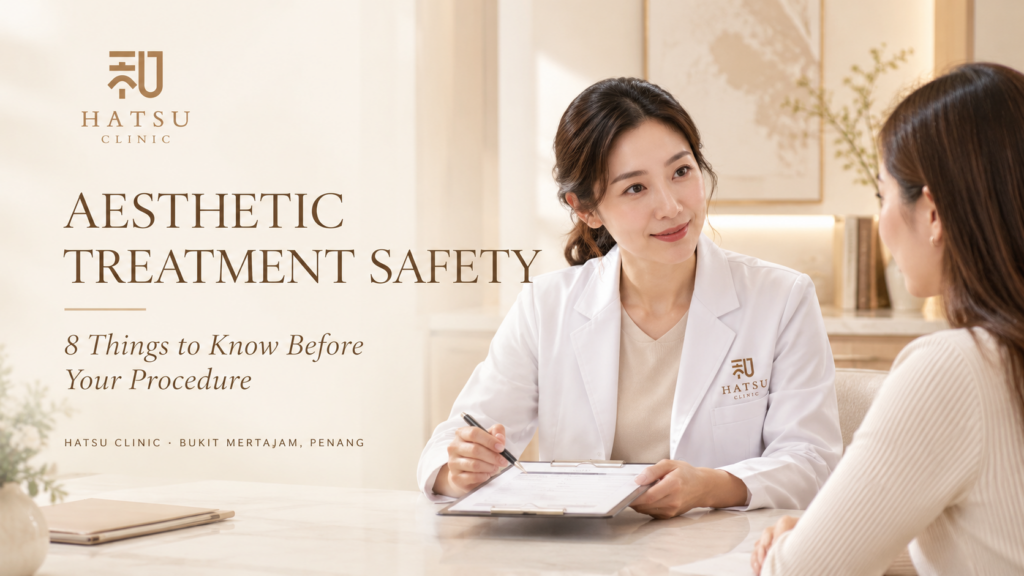
Hence, choosing a treatment should not based on price, popularity and social media trends alone. The most important part of making decision is to understand the procedure, the practitioner’s qualification and the potential risks.
At Hatsu Clinic in Bukit Mertajam, Penang, we hope to educate the public as we believe that patient education and safety should always come before treatment decisions.
Here are 8 important things the public should know before undergoing an aesthetic procedure.
1. Check Your Practitioner’s Qualifications
One of the first things to consider is who will be performing your treatment.
In Malaysia, aesthetic medical practice is subject to relevant Ministry of Health requirements. Public should verify that the medical practitioner has the appropriate registration, credentials and authorisation for the aesthetic services they provide.
Before proceeding, consider asking:
- Is the practitioner a registered medical practitioner?
- Do they have the relevant training and credentials for the proposed procedure?
- Are they appropriately credentialed and authorised to practise aesthetic medicine under the applicable Malaysian requirements?
- Can they explain the procedure, its limitations and its potential complications?
Do not assume that a social media following, a clinic’s appearance or a treatment certificate alone proves that a practitioner is qualified to perform every type of aesthetic procedure.
2. Have a Proper Doctor Consultation Before Treatment
A responsible aesthetic consultation should involve more than selecting a treatment from a menu.
Your practitioner should understand your concerns, medical history, current medications, allergies, previous procedures and treatment expectations. Depending on the procedure, other factors such as pregnancy, breastfeeding, skin conditions or a history of scarring may also be relevant.
A proper assessment helps determine whether a treatment is suitable, whether additional evaluation is needed, or whether another approach would be more appropriate.
3. Understand the Risks and Possible Side Effects
Every aesthetic procedure has its own risk. The risks depend on the treatment, the area being treated, the product or device used and individual patient factors.
Do enquire on the possible risks and the steps to prevent and manage them.
4. Make Sure the Products and Devices Are Appropriate
The product or device used during a procedure matters.
Before treatment, you may ask your practitioner:
- What product or device will be used?
- Is it appropriate for the intended indication and treatment area?
- Is the product registered or otherwise lawfully authorised for use in Malaysia, where applicable?
- Is the device properly maintained and used according to its instructions?
- The expected benefits, limitations and alternatives?
Be cautious of products with unclear origins, suspiciously low prices or claims that sound too good to be true.
A brand name or famous brand in social media alone does not guarantee safety. Proper product selection, storage, handling, technique and patient assessment all matter.
5. Never Skip Informed Consent
Informed consent means understanding the proposed treatment before agreeing to it.
Your practitioner should explain the purpose of the procedure, expected benefits, material risks, reasonable alternatives and what may happen if you decide not to proceed.
You should also have the opportunity to ask questions and take time to consider your decision.
Before consenting, make sure you understand:
- What the procedure involves.
- What results may reasonably be expected.
- What the known risks and limitations are.
- Whether multiple sessions or maintenance may be needed.
- What the recovery period and aftercare involve.
- What additional costs may arise if further care is required.
6. Follow Pre-Treatment and Aftercare Instructions
Safety does not end when the procedure is completed.
Depending on the treatment, your practitioner may advise you to modify certain skincare products, avoid specific activities temporarily, protect your skin from sunlight or follow particular wound-care instructions.
Follow the instructions provided for your specific procedure rather than relying solely on general advice from social media.
If you encounter or experience any unexpected reaction, know whom should you contact is also important.
7. Be Realistic About Treatment Results
All treatment outcomes vary according to the individual’s anatomy, skin condition, medical history, treatment technique and response to treatment. Some procedures produce gradual changes, while others may require several sessions. Certain results are temporary and may need maintenance.
Be cautious of claims such as:
- Guaranteed results for everyone.
- Permanent results from a treatment that is not permanent.
- No risks or side effects whatsoever.
- Immediate, dramatic improvement without any recovery or limitations.
Before treatment, discuss with your practitioner what improvement is realistic, how long it may take to see changes and what the procedure cannot achieve.
8. Know When to Delay or Avoid Treatment
There are circumstances in which an elective aesthetic procedure may need to be postponed or may not be suitable.
For example, recent sunburn, an active skin infection, certain medical conditions, particular medications or pregnancy may affect the safety or timing of some treatments. The relevant considerations differ from one procedure to another.
Always disclose your medical history honestly and tell your practitioner about any recent treatments, allergies, medications or changes in your health.
Even if you are uncertain, ask whether the procedure should be delayed while you receive further assessment or medical advice.
Safety Comes Before Aesthetic Results
Aesthetic medicine is not simply about choosing a procedure. It involves understanding your concerns, assessing your suitability, discussing the risks and making an informed decision.
Hence, before undergoing any aesthetic treatment, you should take the time to ask questions, understand your options and verify your practitioner’s credentials.
At HATSU Clinic, Bukit Mertajam, Penang, we believe that good aesthetic care begins with proper assessment, clear communication and realistic expectations.
This article is intended for general educational purposes only and does not replace an individual medical consultation. The suitability, risks and precautions of any procedure should be discussed with an appropriately qualified medical practitioner.

 English
 Chinese