
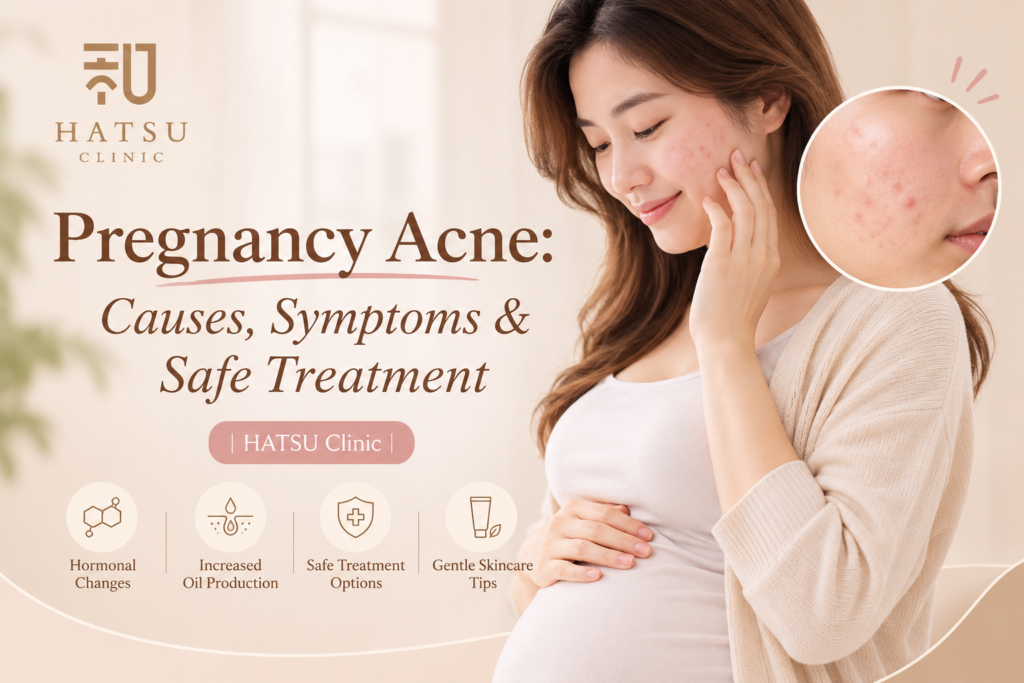
Skin was fine before pregnancy, but suddenly struggling with pimples, oily skin and clogged pores during pregnancy. Why is that so?
Hormonal changes during pregnancy can increase oil production, making your skin more prone to acne.
Many people will look for ways to resolve the condition but here’s something important: Not every acne treatment is pregnancy-safe.
Before reaching for your usual acne products, take a moment to check the ingredients as your skin needs care, but your baby’s safety always come first.
Why does acne happen during pregnancy?
Pregnancy brings significant hormonal changes, particularly fluctuations in hormones such as progesterone.
These changes may stimulate the sebaceous glands (oil glands) to produce more sebum. When excess oil combines with dead skin cells, pores can become clogged, creating an environment where acne develops.
How does pregnancy acne look like?
Pregnancy-related acne may present as:
- Small bumps and whiteheads.
- Blackheads and clogged pores.
- Red, inflamed pimples.
- Deeper and sometimes painful acne lesions, particularly around the chin and jawline.
The severity varies from person to person. Some women experience mild breakouts, while others may develop more persistent inflammatory acne.
When does pregnancy acne usually happen?
Acne can occur at any stage of pregnancy, but hormonal changes during the first trimester may trigger breakouts in some women.
Some women experience improvement as pregnancy progresses, while others continue to experience acne throughout pregnancy.
How can you manage acne safely during pregnancy?
The good news is that acne can still be managed during pregnancy. However, treatment selection requires extra care.
A. Keep your skincare routine simple
- Cleanse your face twice daily using a gentle cleanser.
- Use a lightweight, non-comedogenic moisturiser.
- Apply broad-spectrum sunscreen daily.
- Avoid excessive exfoliation and harsh skincare products.
- Avoid picking or squeezing pimples to reduce the risk of scarring.
B. Understand your skincare ingredients
Some acne-fighting ingredients may be considered for use during pregnancy, subject to medical advice.
| Ingredient | Pregnancy considerations |
| Azelaic acid | Generally considered a suitable option |
| Benzoyl peroxide | May be used in limited amounts following medical advice |
| Salicylic acid | Limited topical use may be considered; avoid high concentrations or extensive application |
| Glycolic acid | May be considered in certain topical formulations |
Always consult your doctor before introducing active ingredients, even if they are available over the counter.
Which acne ingredients should pregnant women avoid?
Important safety reminder
Not all acne treatments are suitable during pregnancy.
Ingredients and medications that should be avoided include:
- Isotretinoin: Oral medication associated with a high risk of serious birth defects.
- Topical retinoids: Including tretinoin, adapalene and tazarotene. These are generally avoided during pregnancy.
- Spironolactone: An anti-androgen medication that should not be used during pregnancy.
- Oral tetracycline antibiotics: Including doxycycline and minocycline, which are unsuitable during pregnancy.
Can you undergo facial treatments during pregnancy?
This is one of the most common questions from expecting mothers.
The answer depends on the type of treatment, ingredients used and individual pregnancy circumstances.
During pregnancy, it is advisable to:
- Inform your aesthetic doctor about your pregnancy before any treatment.
- Avoid aggressive chemical peels or treatments with uncertain pregnancy safety.
- Avoid procedures involving ingredients or medications that are contraindicated during pregnancy.
- Prioritise gentle cleansing, hydration and skin barrier care.
Not every facial treatment is automatically safe just because it is non-invasive. Always talk to your doctor and undergo professional assessment before proceeding.
Will acne disappear after delivery?
For many women, acne gradually improves after childbirth as hormone levels begin to stabilise.
However, some women may continue experiencing acne during the postpartum period, particularly during breastfeeding, when hormonal fluctuations continue.
If acne persists, becomes painful or leaves scars, seek professional assessment to determine an appropriate treatment plan.
Takeaway:
Pregnancy is a beautiful journey, but it also brings many changes to your body, including your skin.
Experiencing acne during pregnancy does not mean you are doing anything wrong. Your skin is responding to a period of significant hormonal change.
Rather than rushing into aggressive treatments or trying multiple skincare products, take time to understand your skin and choose an appropriate approach.
Healthy skin is not about having a perfect complexion. It is about knowing what your skin needs and caring for it safely.

 English
 Chinese