
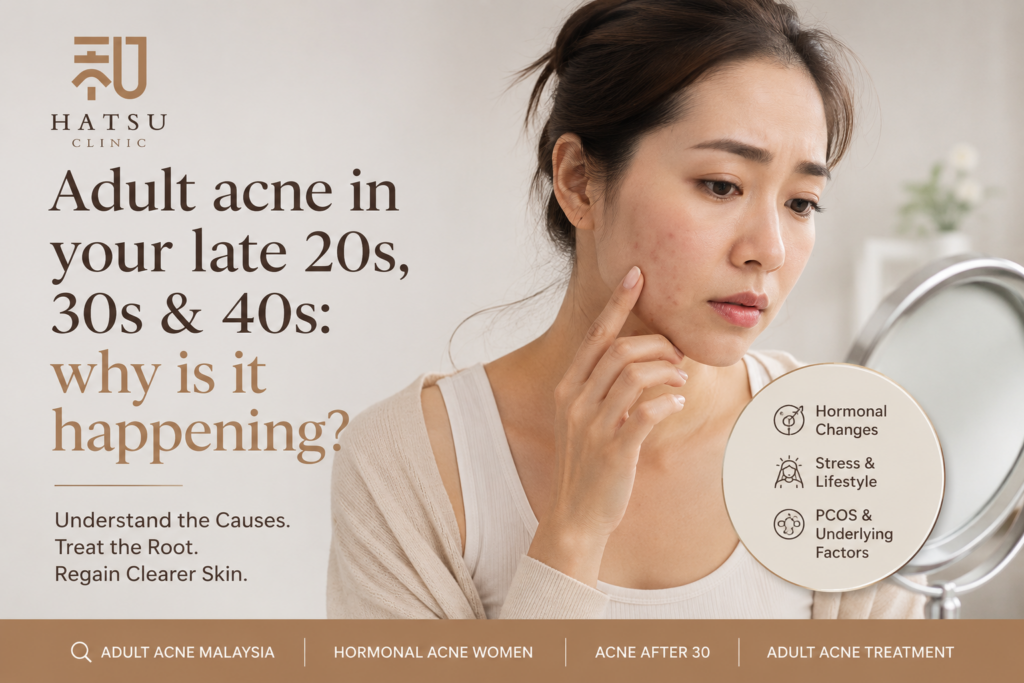
You finally made it through your teenage years, only to find yourself dealing with pimples again in your late 20s, 30s, or even 40s. Sound familiar?
You’re not alone. Adult acne has become increasingly common, particularly among women. In fact, many people who never struggled with acne as teenagers may suddenly experience persistent breakouts later in life.
What Is Adult Acne?
Adult acne refers to acne that develops in late 20’s. It can either:
- Persist from adolescence into adulthood or
- Appear for the first time in adulthood.
Unlike teenage acne, adult acne often has multiple contributing factors, including hormonal changes, stress, genetics, lifestyle, and underlying medical conditions.
Why Is Adult Acne Becoming More Common?
Adult acne usually develops when several factors work together.
1. Hormonal Fluctuations
Hormones are one of the biggest reasons especially women.
Hormonal changes increase androgen activity, which stimulates the sebaceous glands, the glands that produce oil. This leads to:
- Excess oil production
- Clogged pores
- Increased inflammation
- Growth of acne-causing bacteria
Women often notice breakouts:
- Before their menstrual period
- During pregnancy
- After childbirth
- Around menopause
- After stopping certain contraceptive pills
Hormonal acne commonly appears along the jawline, chin, and lower cheeks.
2. Stress and Modern Lifestyles
Busy life, lack of sleep, and daily pressures can all contribute to acne.
When you’re stressed, your body releases cortisol and other stress hormones. These hormones can:
- Increase oil production
- Trigger inflammation
- Slow skin healing
Stress alone may not cause acne, but it can certainly make existing acne worse.
3. Polyendocrine Metabolic Ovarian Syndrome (PMOS)
For some women, persistent acne may be a sign of an underlying hormonal condition known as Polyendocrine Metabolic Ovarian Syndrome, formerly known as Polycystic Ovary Syndrome (PCOS).
Other symptoms may include:
- Irregular menstrual cycles
- Excess facial or body hair
- Weight gain
- Hair thinning
- Difficulty conceiving
If acne is accompanied by these symptoms, medical evaluation is important to identify and manage the underlying condition.
4. Genetics
If your parents experienced acne well into adulthood, your chances of developing adult acne are higher.
Genetics influence:
- Oil gland activity
- Inflammatory response
- Skin sensitivity
- Scar formation
5. Lifestyle Factors
Everyday habits can also influence adult acne.
These include:
- Poor sleep quality
- Smoking
- High stress levels
- Wearing heavy or pore-clogging makeup
- Not removing makeup thoroughly
- Frequent touching of the face
Diet may also play a role for some individuals. Foods with a high glycaemic index or excessive dairy intake have been associated with acne in certain people, although responses vary from person to person.
How Is Adult Acne Different from Teenage Acne?
Although they may look similar, adult acne behaves differently.
| Teenage Acne | Adult Acne |
|---|---|
| Mostly affects the forehead, nose, and cheeks (T-zone) | Commonly affects the jawline, chin, and lower face |
| Often caused by puberty | Frequently linked to hormonal fluctuations, stress, and lifestyle |
| More blackheads and whiteheads | More deep, tender, inflammatory pimples |
| Skin tends to be oilier | Skin may be sensitive or combination |
| Often improves with age | Can persist or recur without treatment |
Professional Treatment Options for Adult Acne
Medical-Grade Skincare
Prescription-strength topical medications can help:
- Reduce clogged pores
- Control oil production
- Decrease inflammation
- Prevent new breakouts
Oral Medications
For moderate to severe acne, treatment may include:
- Oral antibiotics
- Hormonal therapy for suitable female patients
- Even Oral isotretinoin in selected cases
These treatments require medical supervision to ensure their safety and efficacy.
Chemical Peels
Medical-grade chemical peels help to:
- Exfoliate congested skin
- Improve post-acne pigmentation
- Reduce clogged pores
- Enhance skin texture
Laser and Light-Based Treatments
Selected laser and light therapies may help reduce acne-causing bacteria, calm inflammation, and improve redness. They can also play a role in managing acne scars once active breakouts are under control.
Developing acne in adulthood can be frustrating, especially when you thought those days were behind you.
Adult acne often has different underlying causes from teenage acne, it requires a personalised approach. By identifying contributing factors such as hormones, stress, lifestyle, or underlying conditions like PMOS, treatment can be tailored to achieve clearer skin while reducing the risk of future breakouts and scarring.
If you’ve been struggling with persistent acne in your late 20s, 30s, or 40s, seeking professional assessment early can help you regain healthier skin and confidence.

 Chinese
  English